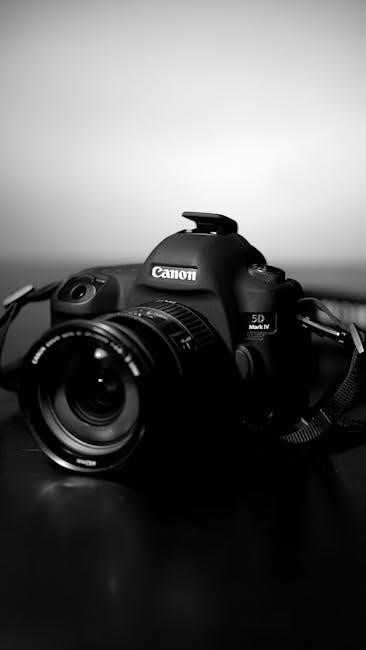
Canon 5D Mark III Owners Manual: A Comprehensive Guide
This guide provides essential information for 5D Mark III users, detailing setup, features, and troubleshooting. Download the official PDF manual from Canon’s website or purchase a physical copy via Amazon. Explore resources for optimal camera performance and maintenance.
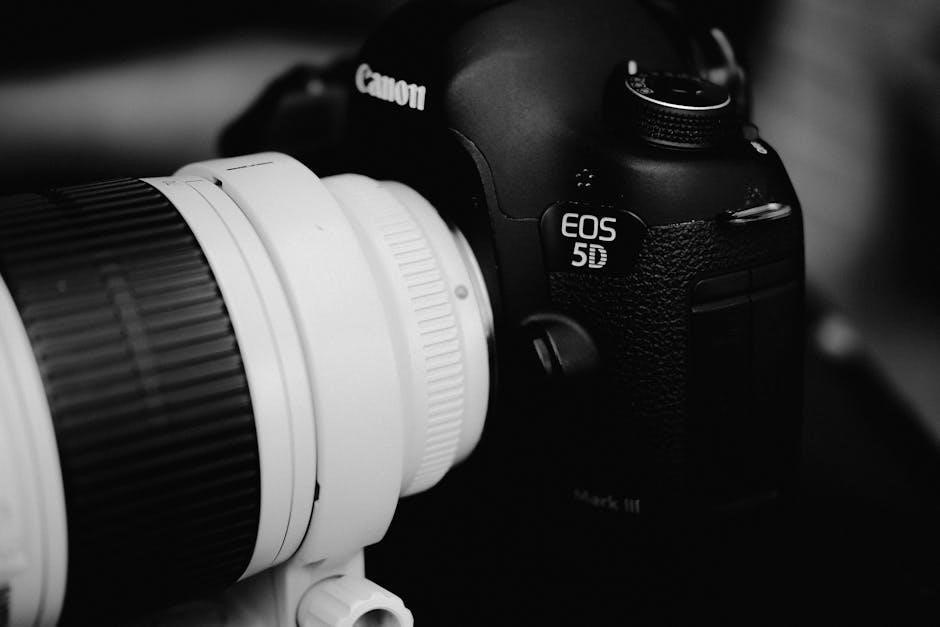
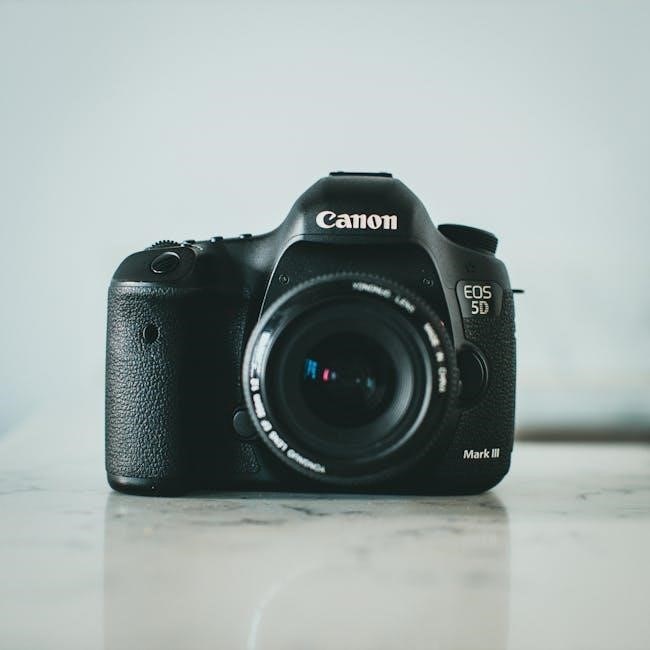
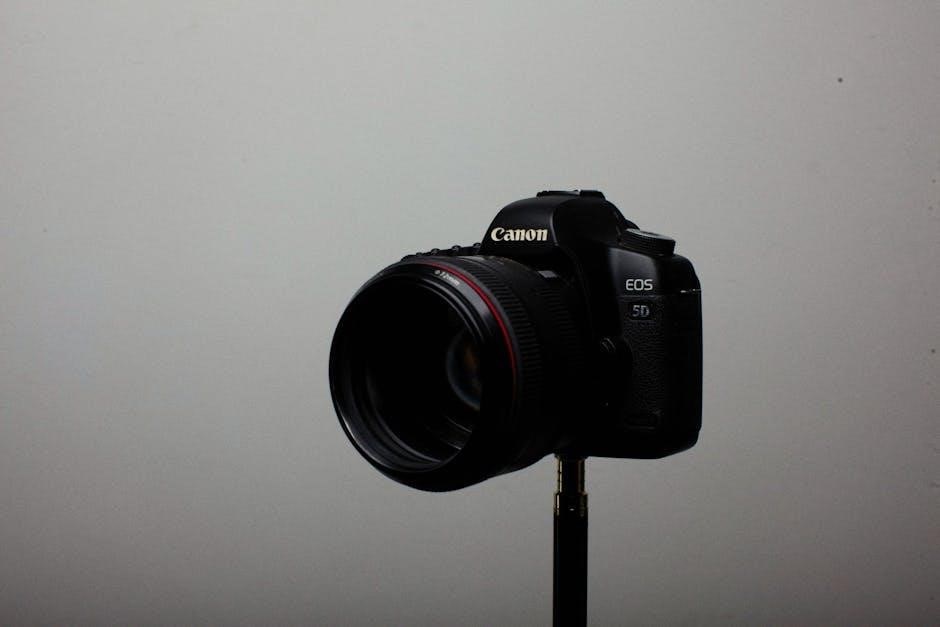
The Canon EOS 5D Mark III represents a significant leap in full-frame DSLR technology, favored by professionals and enthusiasts alike. This camera boasts a 22.3-megapixel full-frame CMOS sensor, delivering exceptional image quality and detail. It’s renowned for its robust build, advanced autofocus system, and impressive video capabilities.
Understanding this camera requires a thorough grasp of its features and functionalities, which is where this comprehensive guide comes into play. Whether you’re a seasoned photographer or new to the world of DSLRs, mastering the 5D Mark III unlocks a world of creative possibilities. This manual will guide you through every aspect, from initial setup to advanced techniques.
Prepare to delve into the intricacies of the 5D Mark III, learning how to harness its power to capture stunning photographs and videos. We will explore the menu system, customization options, and troubleshooting tips to ensure you get the most out of your investment.
Where to Download the Official Manual (PDF)
Canon provides several avenues for accessing the official 5D Mark III owner’s manual in PDF format. The primary source is the Canon USA website (Canon USA Manuals), offering a direct download link within the Brochures and Manuals section.
Alternatively, Canon Central and North Africa (Canon CNA Support) also hosts the manual for download, catering to users in that region. Be cautious when sourcing manuals from third-party websites, as some may contain watermarks or outdated information.
A watermark-free version was reportedly available via Canon Rumors, though verifying its authenticity is crucial. Amazon also sells a physical copy of the original instruction manual, providing a tangible resource for offline access. Ensure you download from official Canon sources for the most accurate and up-to-date documentation.
Understanding the Manual’s Structure
The Canon EOS 5D Mark III manual is designed to guide users from initial setup to advanced photographic techniques. It begins with an introduction to the camera’s features and functionalities, followed by detailed instructions on basic operations like setting the date, time, and menu language.
Subsequent sections delve into the mode dial, shooting modes, and navigating the complex menu system. A significant portion is dedicated to key features such as the autofocus system, metering modes, and image quality settings, explaining RAW versus JPEG formats.
Advanced users will find chapters on customizing button functions, working with picture styles, and utilizing the camera’s video capabilities. Finally, the manual includes a troubleshooting section addressing common issues and providing maintenance guidance, alongside information on firmware updates. The manual also includes a user agreement to review before operation.
Camera Setup and Basic Operations
Begin with initial settings – date, time, and menu language – for a personalized experience. Familiarize yourself with the mode dial and shooting modes for versatile control.
Initial Camera Setup: Date, Time, and Menu Language
Upon first powering on your Canon EOS 5D Mark III, establishing the correct date and time is crucial for accurate image metadata and organization. Navigate through the menu system – accessible via the ‘MENU’ button – to locate the date/time settings. Ensure accuracy, as this information is embedded within each captured image file.
Similarly, configuring the menu language to your preference enhances usability and understanding of the camera’s functions. The 5D Mark III supports multiple languages, allowing you to comfortably navigate the extensive menu options. This customization streamlines your workflow and minimizes potential confusion. Proper setup of these fundamental settings ensures a smooth and efficient shooting experience from the outset. Take the time to verify these settings before embarking on your photographic journey with the 5D Mark III.
Remember to save these settings after making adjustments to guarantee they are retained for future use. Refer to the official Canon manual for detailed step-by-step instructions and visual aids if needed.
Understanding the Mode Dial and Shooting Modes
The Canon 5D Mark III’s mode dial is your primary control for selecting the shooting mode, dictating how the camera manages aperture, shutter speed, and ISO. Familiarize yourself with each mode to unlock the camera’s full potential. ‘P’ (Programmed Auto) offers automatic settings with some user control, while ‘Tv’ (Shutter Priority) lets you set the shutter speed for motion control.
‘Av’ (Aperture Priority) allows control over depth of field, and ‘M’ (Manual) grants complete control over all settings. Scene Intelligent Auto automatically selects the optimal settings for common scenes. Creative modes like Landscape, Portrait, and Sports offer pre-configured settings for specific situations. Bulb mode is ideal for long exposures.
Understanding these modes is fundamental to achieving desired photographic results. Experiment with each mode to grasp their nuances and how they impact image characteristics. The official Canon manual provides detailed explanations and examples for each shooting mode.
Navigating the Canon 5D Mark III Menu System
The Canon 5D Mark III’s menu system, accessed via the ‘Menu’ button, is logically organized into several tabs: Shooting, AF, Exposure, Picture Quality, and Setup. Each tab contains numerous settings for customizing the camera to your preferences. Utilize the directional buttons and ‘Set’ button to navigate and adjust options.
The ‘Shooting’ tab controls image capture settings, while ‘AF’ manages autofocus parameters. ‘Exposure’ allows fine-tuning of metering and exposure compensation. ‘Picture Quality’ dictates RAW or JPEG recording and image size. ‘Setup’ handles camera settings like date, time, and display options.
Familiarizing yourself with the menu structure is crucial for efficient operation. The official Canon manual provides a comprehensive guide to each menu item and its function. Don’t hesitate to explore and experiment with different settings to optimize your workflow.

Key Features and Functionality
Explore the 5D Mark III’s advanced autofocus, metering, and image quality settings. Master RAW vs. JPEG, and unlock the camera’s full potential for stunning results.

Autofocus System: Modes and Customization
The Canon EOS 5D Mark III boasts a sophisticated 61-point autofocus system, offering exceptional precision and tracking capabilities. Understanding the various AF modes – including One Shot, AI Servo, and AI Focus – is crucial for capturing sharp images in diverse shooting scenarios. One Shot is ideal for static subjects, while AI Servo excels at tracking moving objects. AI Focus intelligently switches between the two.
Customization options are extensive, allowing photographers to tailor the AF system to their specific needs. Users can select AF point expansion, AF area selection mode, and tracking sensitivity. Case settings provide pre-defined configurations for different subject types, such as people, animals, or vehicles. Fine-tuning the AF system ensures optimal performance and consistently sharp results, even in challenging conditions. Experimenting with these settings will unlock the full potential of the 5D Mark III’s autofocus capabilities.
Metering Modes and Exposure Control
The Canon 5D Mark III offers a range of metering modes to accurately assess light and achieve proper exposure. Evaluative metering, the default, analyzes the entire scene for balanced results. Partial metering focuses on a smaller area, useful for backlit subjects. Spot metering measures light from a very small point, ideal for precise control. Center-weighted average metering prioritizes the center of the frame.
Exposure control is achieved through aperture, shutter speed, and ISO settings, often working in conjunction with exposure compensation. Understanding the relationship between these elements is vital for creative control. Histograms provide a visual representation of tonal distribution, aiding in exposure assessment. Highlight alert warns of overexposed areas. Mastering these tools allows photographers to consistently capture well-exposed images, regardless of lighting conditions, and realize their artistic vision.
Image Quality Settings: RAW vs. JPEG
The Canon 5D Mark III allows photographers to choose between RAW and JPEG image formats, each offering distinct advantages. RAW files capture all data recorded by the sensor, providing maximum flexibility for post-processing and editing. They retain a wider dynamic range and color information, crucial for demanding workflows. However, RAW files are larger and require dedicated software for editing.
JPEG files, conversely, are compressed and processed in-camera, resulting in smaller file sizes and immediate usability. They are convenient for quick sharing and require no editing, but offer limited post-processing latitude. Selecting the appropriate quality setting within JPEG impacts file size and detail retention. For serious photographers prioritizing image quality and editing control, RAW is generally preferred, while JPEG suits casual shooting and immediate results.
Advanced Techniques and Settings
Unlock the 5D Mark III’s full potential by customizing controls, exploring picture styles, and mastering video features for exceptional results.
Customizing Button Functions and Controls
The Canon EOS 5D Mark III offers extensive customization options, allowing photographers to tailor the camera’s controls to their individual shooting styles. Through the menu system, users can reassign functions to various buttons, including the AF-ON button, depth-of-field preview button, and even the quick control dial.
This level of personalization streamlines workflow and ensures frequently used settings are readily accessible. Consider assigning essential functions like ISO adjustment or white balance control to easily reachable buttons. Custom Presets can also be saved, enabling quick switching between different shooting configurations. Experimenting with these settings is crucial for maximizing efficiency and responsiveness in diverse photographic scenarios. Proper customization transforms the 5D Mark III into a truly extension of the photographer’s vision.
Working with Picture Styles and Color Spaces
Canon’s Picture Styles offer pre-defined tonal settings, influencing the look of your images directly in-camera. Options include Standard, Portrait, Landscape, Neutral, Faithful, and Monochrome, each designed for specific photographic subjects. Users can further customize these styles, adjusting sharpness, contrast, color saturation, and tone to achieve a desired aesthetic.
Understanding Color Spaces – sRGB and Adobe RGB – is also vital. sRGB is ideal for web use and general printing, while Adobe RGB offers a wider color gamut, beneficial for professional printing and extensive post-processing. Selecting the appropriate color space during shooting ensures accurate color reproduction throughout the workflow. Experimenting with Picture Styles and color spaces allows photographers to develop a unique visual signature.
Utilizing the 5D Mark III’s Video Capabilities
The 5D Mark III excels in video recording, offering Full HD 1080p resolution at various frame rates, including 24, 30, and 60 fps. Manual control over exposure, focus, and audio is paramount for achieving professional-looking footage. Utilize the external microphone input for superior sound quality, bypassing the camera’s built-in microphone.
Mastering focus during video recording requires practice; employ Live View with magnification for precise adjustments. Understand the limitations of recording time (approximately 29 minutes, 59 seconds) due to file size restrictions. Explore the use of Picture Styles to influence the color and tonal range of your videos. Post-production editing software allows for further refinement and color grading.
Troubleshooting and Maintenance
Address common issues with Canon’s support resources, perform regular cleaning, and ensure firmware is updated. Proper care extends the 5D Mark III’s lifespan and performance.
Common Issues and Solutions
Encountering autofocus problems? Verify focus mode settings and lens compatibility. If images appear blurry, check shutter speed and aperture. For exposure issues, review metering mode and exposure compensation. Regarding error messages, consult the Canon support website for specific codes and resolutions.
Sometimes, card errors occur; ensure the card is compatible and properly formatted. If the camera freezes, try a soft reset by removing and reinserting the battery. Persistent issues may require a factory reset – remember to back up important data first! Canon’s online resources offer detailed troubleshooting guides and FAQs.
Additionally, investigate potential problems with custom functions, as incorrect settings can lead to unexpected behavior. Regularly check for firmware updates, as these often address known bugs and improve performance. Don’t hesitate to contact Canon’s technical support for assistance with complex issues.

Cleaning and Maintaining Your 5D Mark III
Regularly clean the exterior with a soft, dry cloth to remove dust and fingerprints. Use a blower to gently remove dust from the sensor – avoid touching it directly. Clean the viewfinder eyepiece with a lens cleaning cloth. Inspect the lens contacts for dust and carefully clean them with a soft brush.
Store your camera in a dry, dust-free environment, ideally in a camera bag. Avoid extreme temperatures and humidity. Periodically check the battery compartment for corrosion. Never use harsh chemicals or solvents for cleaning. Ensure the camera is turned off before any cleaning procedure.
Professional sensor cleaning is recommended every few years, especially if you frequently change lenses. Proper maintenance extends the lifespan of your 5D Mark III and ensures optimal image quality. Refer to the Canon manual for detailed cleaning instructions and precautions.
Firmware Updates and Their Importance
Canon periodically releases firmware updates for the 5D Mark III to improve performance, fix bugs, and add new features. Checking for updates is crucial for optimal camera functionality. Download the latest firmware from Canon’s official support website. Follow the instructions carefully during the update process – interrupting it can damage your camera.
Firmware updates can enhance autofocus accuracy, improve image quality, and address compatibility issues. They often include improvements to video recording capabilities. Regular updates ensure your camera remains current with the latest technological advancements. Back up your important photos before performing a firmware update as a precaution.
Canon provides detailed instructions and support resources for firmware updates on their website. Ignoring updates can lead to suboptimal performance or even malfunctions. Staying up-to-date is a simple yet effective way to maximize your 5D Mark III’s potential.