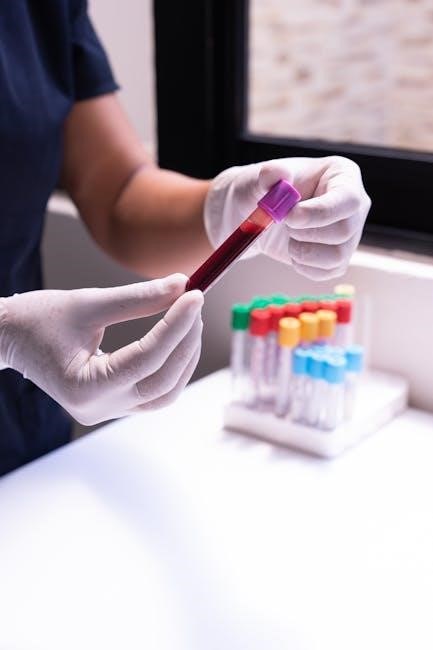
A Manual of Laboratory and Diagnostic Tests prepares students for safe‚ effective care during procedures‚ offering step-by-step guidance and expert information on preparation.
This comprehensive resource details over 900 tests‚ linking 600+ conditions to diagnostic methods‚ with easy alphabetical access and teaching instructions for patients.
Purpose of Diagnostic Testing
Diagnostic testing‚ as detailed in A Manual of Laboratory and Diagnostic Tests‚ is crucial for evaluating physiological states and monitoring disease progression. These tests guide therapeutic decisions‚ providing clinicians with essential information for accurate patient care.
The manual emphasizes how these procedures confirm diagnoses‚ linking over 600 diseases and conditions to specific tests. Understanding the purpose allows nurses to deliver informed care‚ preparing patients effectively and interpreting results accurately. This comprehensive approach ensures safe and effective healthcare delivery‚ benefiting both patients and providers.
Historical Overview of Lab Testing
A Manual of Laboratory and Diagnostic Tests reflects a long evolution of testing‚ from rudimentary observations to sophisticated molecular diagnostics. Early lab work focused on basic analyses‚ gradually expanding with advancements in technology and understanding of disease processes.
The manual’s extensive coverage—over 900 tests—demonstrates this progression. Modern testing builds upon historical foundations‚ offering increasingly precise insights into patient health. This historical context is vital for appreciating the current capabilities and limitations of laboratory medicine‚ ensuring informed clinical practice.

Specimen Collection and Handling
A Manual of Laboratory and Diagnostic Tests emphasizes correct procedure‚ patient preparation‚ and aftercare‚ crucial for accurate results and safe‚ effective testing.
Common Specimen Types
A Manual of Laboratory and Diagnostic Tests thoroughly covers diverse specimen collection‚ essential for accurate diagnoses. It details procedures for blood‚ urine‚ and tissue biopsies‚ emphasizing proper technique.
The manual provides detailed guidance on handling each type‚ ensuring specimen integrity from collection to analysis. Understanding these variations is vital for nurses delivering informed patient care and obtaining reliable laboratory findings‚ ultimately impacting treatment decisions.
Blood Samples
A Manual of Laboratory and Diagnostic Tests provides comprehensive instruction on blood specimen collection‚ a cornerstone of many analyses. It details venipuncture techniques‚ appropriate tube types‚ and order of draw‚ crucial for preventing contamination.
The manual emphasizes patient preparation and safety protocols‚ ensuring accurate results. Proper handling‚ storage‚ and transport are also covered‚ vital for maintaining sample integrity and reliable diagnostic outcomes for diverse patient populations.
Urine Samples
A Manual of Laboratory and Diagnostic Tests thoroughly explains urine specimen collection methods‚ including midstream clean catch‚ 24-hour collections‚ and catheterized samples. It details proper labeling and preservation techniques to maintain sample integrity.
The manual stresses the importance of patient education regarding collection procedures and potential interferences. It also covers appropriate handling and transport protocols‚ ensuring accurate analysis and reliable diagnostic information regarding renal function and overall health.
Tissue Biopsies
A Manual of Laboratory and Diagnostic Tests provides detailed guidance on tissue biopsy specimen handling‚ emphasizing rapid and appropriate fixation – typically with formalin – to preserve cellular morphology. It outlines proper labeling procedures‚ including patient identifiers and anatomical site.
The manual highlights the critical role of accurate documentation and transport to pathology‚ ensuring timely analysis for definitive diagnoses. It also addresses potential complications and post-procedure patient care instructions.
Pre-Analytical Factors
A Manual of Laboratory and Diagnostic Tests stresses the significance of pre-analytical variables impacting test accuracy. These factors‚ occurring before analysis‚ include patient preparation – like fasting – and meticulous specimen collection techniques.
Proper specimen labeling‚ avoiding misidentification‚ and prompt‚ appropriate transport are crucial‚ as detailed in the manual; Errors in these phases can lead to incorrect results‚ influencing clinical decisions and patient care.
Patient Preparation
A Manual of Laboratory and Diagnostic Tests emphasizes detailed patient preparation instructions for reliable results. This includes specific fasting periods before glucose or lipid panels‚ medication adjustments as directed by a physician‚ and hydration guidelines prior to blood draws.
The manual highlights the importance of clear communication with patients regarding preparation‚ ensuring adherence to protocols and minimizing variables that could compromise test accuracy and interpretation.
Specimen Labeling and Transport
A Manual of Laboratory and Diagnostic Tests stresses meticulous specimen labeling with at least two patient identifiers‚ date‚ and time of collection‚ adhering to strict protocols to prevent errors. Proper transport is crucial‚ utilizing appropriate temperature controls and containers.
The manual details specific handling requirements for various specimens‚ ensuring integrity during transit to the laboratory‚ and minimizing pre-analytical errors that could impact diagnostic accuracy and patient care.
Hematology Tests
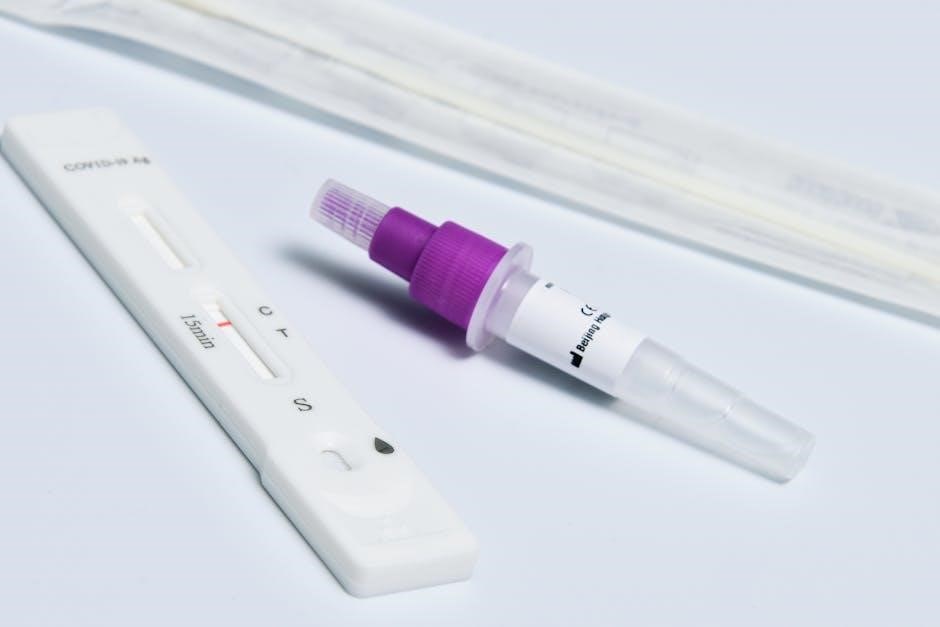
A Manual of Laboratory and Diagnostic Tests covers complete blood counts and coagulation studies‚ vital for evaluating blood cell composition and clotting function.
Complete Blood Count (CBC)
A Manual of Laboratory and Diagnostic Tests thoroughly explains the Complete Blood Count (CBC)‚ a foundational hematology test. It details how the CBC assesses red blood cells‚ white blood cells‚ and platelets‚ providing crucial insights into overall health and disease states.
The manual clarifies the significance of red blood cell indices‚ aiding in the diagnosis of anemias‚ and the white blood cell differential‚ which identifies various leukocyte types to detect infections or inflammation. This comprehensive coverage equips students to interpret CBC results effectively.
Red Blood Cell Indices
A Manual of Laboratory and Diagnostic Tests meticulously details red blood cell indices – MCV‚ MCH‚ and MCHC – vital components of the Complete Blood Count (CBC). The manual explains how these indices aid in classifying anemias‚ differentiating between microcytic‚ normocytic‚ and macrocytic types.
Students learn to interpret these values in conjunction with other CBC parameters‚ enabling accurate diagnosis and informed clinical decision-making. The resource emphasizes the clinical significance of each index for comprehensive patient assessment.
White Blood Cell Differential
A Manual of Laboratory and Diagnostic Tests provides a thorough explanation of the white blood cell (WBC) differential‚ detailing the percentages of each leukocyte type – neutrophils‚ lymphocytes‚ monocytes‚ eosinophils‚ and basophils.
The manual clarifies how alterations in these percentages can indicate infection‚ inflammation‚ allergic reactions‚ or hematologic malignancies. Students gain insight into interpreting differential results alongside the total WBC count for accurate diagnostic evaluation and patient care.
Coagulation Studies
A Manual of Laboratory and Diagnostic Tests comprehensively covers coagulation studies‚ essential for evaluating the blood’s ability to clot. It details procedures like Prothrombin Time (PT) and Activated Partial Thromboplastin Time (aPTT)‚ explaining their clinical significance in diagnosing bleeding disorders.
The manual guides students through interpreting results‚ understanding the impact of anticoagulants‚ and recognizing potential causes of prolonged or shortened clotting times for informed patient management.
Prothrombin Time (PT)
A Manual of Laboratory and Diagnostic Tests meticulously explains the Prothrombin Time (PT) test‚ a crucial assessment of the extrinsic and common coagulation pathways. It details the procedure‚ normal ranges‚ and factors influencing PT results‚ including vitamin K deficiency and liver disease.
The manual clarifies how PT is used to monitor warfarin therapy‚ aiding students in understanding its role in preventing and managing thromboembolic events‚ and interpreting potential abnormalities.
Activated Partial Thromboplastin Time (aPTT)
A Manual of Laboratory and Diagnostic Tests thoroughly covers the Activated Partial Thromboplastin Time (aPTT)‚ a vital test evaluating the intrinsic and common coagulation pathways. It provides detailed insights into the testing process‚ expected values‚ and factors impacting aPTT results‚ like heparin use and inherited deficiencies.
The resource emphasizes aPTT’s role in monitoring heparin therapy and diagnosing bleeding disorders‚ equipping students with essential knowledge for accurate interpretation and patient care.

Clinical Chemistry Tests
A Manual of Laboratory and Diagnostic Tests details crucial clinical chemistry assessments‚ including electrolyte panels‚ liver function tests‚ and renal function evaluations for diagnosis.
Electrolyte Panel
A Manual of Laboratory and Diagnostic Tests thoroughly covers electrolyte panels‚ essential for assessing fluid balance‚ nerve and muscle function‚ and acid-base homeostasis.
These tests measure key electrolytes like sodium‚ potassium‚ chloride‚ and bicarbonate‚ providing critical insights into various conditions. The manual guides understanding of interpreting results‚ correlating them with clinical presentations‚ and recognizing potential implications for patient care‚ ensuring informed decisions regarding treatment and monitoring.
Liver Function Tests (LFTs)
A Manual of Laboratory and Diagnostic Tests provides detailed coverage of Liver Function Tests (LFTs)‚ crucial for evaluating liver health and identifying potential damage or disease.
The manual explains how LFTs‚ including ALT‚ AST‚ bilirubin‚ and alkaline phosphatase‚ are utilized to assess liver function‚ diagnose conditions like hepatitis and cirrhosis‚ and monitor treatment effectiveness. It emphasizes accurate interpretation and correlation with clinical findings for optimal patient management.
Renal Function Tests
A Manual of Laboratory and Diagnostic Tests comprehensively details Renal Function Tests‚ essential for assessing kidney health and identifying potential dysfunction.
The resource explains key tests like creatinine‚ BUN‚ and GFR‚ outlining their roles in evaluating glomerular filtration rate and overall kidney function. It highlights how these tests aid in diagnosing conditions like kidney disease and monitoring treatment responses‚ emphasizing accurate interpretation for effective patient care.
Immunology and Serology
A Manual of Laboratory and Diagnostic Tests covers antibody titers‚ ELISA‚ and flow cytometry‚ crucial for immune response evaluation and disease diagnosis.
Antibody Titers
A Manual of Laboratory and Diagnostic Tests details antibody titer assessments‚ vital for gauging immune system responses to specific antigens. These tests measure the concentration of antibodies in serum‚ indicating past or present infection‚ or vaccination effectiveness.
The manual explains how serial dilutions are used to determine the highest dilution still reacting with the antigen‚ expressed as a titer value. Understanding titer results aids in diagnosing infectious diseases‚ autoimmune disorders‚ and evaluating vaccine-induced immunity‚ providing crucial clinical insights.
ELISA (Enzyme-Linked Immunosorbent Assay)
A Manual of Laboratory and Diagnostic Tests thoroughly covers ELISA‚ a widely used immunological assay for detecting and quantifying antigens or antibodies. The manual explains the process: an antigen binds to a surface‚ then antibodies are added‚ followed by an enzyme-linked secondary antibody;
Color change intensity‚ measured spectrophotometrically‚ correlates to the analyte concentration. ELISA’s versatility makes it crucial for diagnosing infectious diseases‚ hormone levels‚ and autoimmune conditions‚ offering sensitive and specific results.
Flow Cytometry
A Manual of Laboratory and Diagnostic Tests details flow cytometry‚ a powerful technique used to analyze the physical and chemical characteristics of cells in a fluid. This method utilizes fluorescently labeled antibodies to identify and quantify specific cell populations based on their surface and intracellular markers.
Flow cytometry is vital in hematology‚ immunology‚ and cancer diagnosis‚ enabling precise cell counting‚ sorting‚ and phenotyping for comprehensive clinical assessment and monitoring.
Microbiology Tests
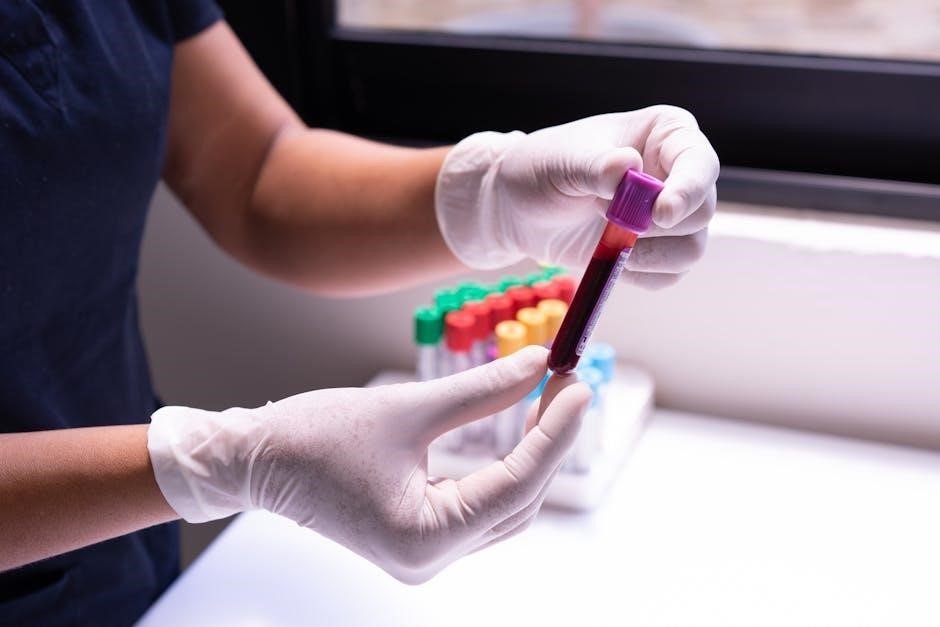
A Manual of Laboratory and Diagnostic Tests covers bacterial culture‚ Gram staining‚ and molecular diagnostics like PCR for identifying infectious agents efficiently.
Bacterial Culture and Sensitivity
A Manual of Laboratory and Diagnostic Tests details bacterial culture and sensitivity testing‚ crucial for identifying pathogens and determining appropriate antibiotic treatments.
This process involves growing bacteria from a sample‚ like blood or urine‚ to pinpoint the specific infectious agent. Subsequently‚ sensitivity testing assesses the bacteria’s response to various antibiotics‚ guiding clinicians in selecting the most effective medication. The manual provides comprehensive guidance on specimen collection‚ inoculation techniques‚ and interpretation of results‚ ensuring accurate diagnoses and optimized patient care.
Gram Staining
A Manual of Laboratory and Diagnostic Tests thoroughly explains Gram staining‚ a fundamental technique in microbiology for rapidly classifying bacteria.
This differential staining method categorizes bacteria as Gram-positive or Gram-negative based on cell wall structure‚ aiding in initial identification. The manual details the procedure‚ from smear preparation to microscopic examination‚ emphasizing proper technique for accurate results. Understanding Gram stain results is vital for guiding antibiotic selection and informing further diagnostic testing‚ ultimately improving patient outcomes.
Molecular Diagnostics (PCR)
A Manual of Laboratory and Diagnostic Tests provides detailed coverage of Polymerase Chain Reaction (PCR)‚ a revolutionary molecular technique for detecting infectious agents.
PCR amplifies specific DNA sequences‚ enabling rapid and sensitive identification of pathogens‚ even in low concentrations. The manual explains the principles of PCR‚ its various applications in clinical microbiology‚ and interpretation of results. It highlights the importance of quality control and potential sources of error‚ ensuring accurate diagnosis and appropriate patient management.
Urinalysis
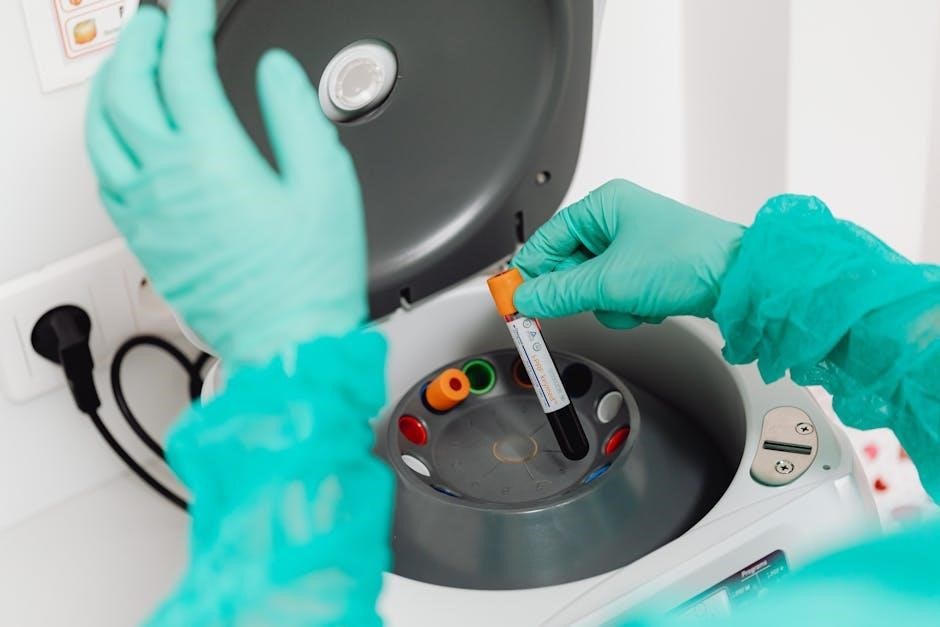
A Manual of Laboratory and Diagnostic Tests details urinalysis‚ covering macroscopic‚ microscopic‚ and chemical analyses for comprehensive evaluation of kidney function and health.
Macroscopic Examination
A Manual of Laboratory and Diagnostic Tests emphasizes that macroscopic urinalysis begins with observing color‚ clarity‚ and the presence of any visible abnormalities.
Normal urine typically presents a pale yellow hue‚ though variations can indicate hydration levels or dietary influences. Turbidity suggests potential infection or crystal presence. Reporting any observed sediment or unusual appearance is crucial for accurate diagnostic interpretation‚ guiding further microscopic and chemical analyses to pinpoint underlying health conditions.
Microscopic Examination
A Manual of Laboratory and Diagnostic Tests details that microscopic urinalysis involves examining urine sediment for cells‚ crystals‚ and casts.
Identifying red blood cells indicates potential kidney damage or infection‚ while white blood cells suggest inflammation. Crystal types can pinpoint metabolic disorders‚ and casts reveal conditions affecting kidney tubules. Accurate identification and quantification of these elements are vital for diagnosing urinary tract infections‚ kidney disease‚ and other systemic illnesses.
Chemical Analysis of Urine
A Manual of Laboratory and Diagnostic Tests explains that chemical analysis assesses urine components like pH‚ specific gravity‚ protein‚ glucose‚ ketones‚ bilirubin‚ and blood.
Abnormal levels can indicate various conditions; for example‚ glucose suggests diabetes‚ protein signals kidney disease‚ and bilirubin points to liver dysfunction. Accurate measurement and interpretation of these parameters are crucial for diagnosing metabolic disorders‚ kidney problems‚ and liver diseases‚ guiding appropriate clinical management.
Diagnostic Imaging
A Manual of Laboratory and Diagnostic Tests covers imaging techniques—X-rays‚ CT scans‚ and MRI—vital for visualizing internal structures and aiding diagnoses.
X-rays
A Manual of Laboratory and Diagnostic Tests details X-ray procedures‚ utilizing electromagnetic radiation to create images of bones and dense tissues. This foundational imaging technique is crucial for detecting fractures‚ pneumonia‚ and foreign objects.
The manual explains patient preparation‚ potential risks from radiation exposure‚ and the interpretation of radiographic images. It emphasizes the importance of shielding and minimizing exposure while maximizing diagnostic clarity. Understanding X-ray principles is essential for comprehensive patient care.
CT Scans
A Manual of Laboratory and Diagnostic Tests comprehensively covers Computed Tomography (CT) scans‚ utilizing X-rays and computer processing to create detailed cross-sectional images. These scans are vital for visualizing soft tissues‚ blood vessels‚ and bones with greater clarity than standard X-rays.
The manual details patient preparation‚ including potential contrast dye allergies‚ and explains image interpretation. It highlights CT’s role in diagnosing tumors‚ internal injuries‚ and guiding biopsies‚ emphasizing radiation safety protocols.
MRI
A Manual of Laboratory and Diagnostic Tests provides detailed information on Magnetic Resonance Imaging (MRI)‚ a non-invasive technique employing magnetic fields and radio waves to generate detailed anatomical views. The manual explains how MRI excels at visualizing soft tissues‚ making it crucial for neurological and musculoskeletal assessments.
It covers patient safety considerations‚ particularly regarding metallic implants‚ and outlines the procedure‚ interpretation of images‚ and its role in detecting various pathologies.
Titration in Clinical Chemistry
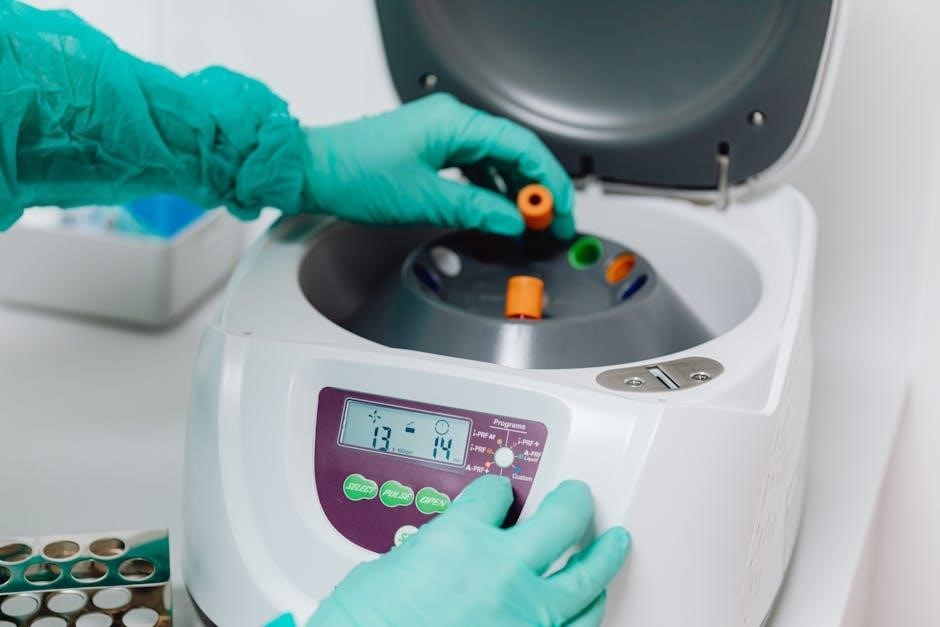
A Manual of Laboratory and Diagnostic Tests details titration’s role in determining acid/base concentrations in body fluids for diagnostic insights into acid-base balance.
Acid-Base Titration Principles
A Manual of Laboratory and Diagnostic Tests explains that acid-base titration hinges on a neutralization reaction‚ carefully determining an unknown concentration. This involves a known acid or base reacting with an analyte until equivalence is reached.
Indicators visually signal the endpoint‚ though precise pH meters offer greater accuracy. Understanding titration curves—graphs plotting pH change versus titrant volume—is crucial for interpreting results. The manual emphasizes the importance of standardized solutions and meticulous technique for reliable measurements in clinical settings‚ ensuring accurate diagnostic data.
Applications in Body Fluid Analysis
A Manual of Laboratory and Diagnostic Tests details how titration assesses acid-base balance in body fluids like gastric juice and urine. Measuring acidity helps diagnose conditions such as metabolic acidosis or alkalosis‚ crucial for effective treatment.
The manual highlights titration’s role in evaluating kidney function and identifying respiratory imbalances. Accurate titration results‚ guided by standardized procedures‚ provide clinicians with vital information for patient care‚ supporting informed decisions regarding fluid and electrolyte management.
Interpreting Test Results
A Manual of Laboratory and Diagnostic Tests emphasizes understanding reference ranges‚ recognizing potential false positives/negatives‚ and correlating results with a patient’s clinical picture.
Reference Ranges
A Manual of Laboratory and Diagnostic Tests highlights the crucial role of reference ranges in accurately interpreting lab results. These ranges‚ established statistically from healthy populations‚ provide a benchmark for comparison.
The manual stresses that variations exist based on age‚ sex‚ and other factors‚ necessitating careful consideration. Understanding these ranges isn’t simply about identifying values outside the norm‚ but about clinical correlation to determine significance and guide appropriate patient care decisions.
False Positives and False Negatives
A Manual of Laboratory and Diagnostic Tests emphasizes the potential for inaccuracies in testing‚ specifically addressing false positives and negatives. These errors can stem from pre-analytical issues‚ analytical interference‚ or patient-specific factors.
The text underscores the importance of critical evaluation of results‚ considering the clinical context‚ and potentially repeating tests to confirm findings. Recognizing these possibilities is vital for avoiding misdiagnosis and ensuring optimal patient management.
Correlation with Clinical Presentation
A Manual of Laboratory and Diagnostic Tests consistently highlights that test results should never be interpreted in isolation. The text stresses the crucial need to correlate laboratory findings with the patient’s complete clinical presentation – including symptoms‚ medical history‚ and physical examination.
This integrated approach ensures accurate diagnosis and appropriate treatment planning‚ avoiding reliance solely on numerical data and acknowledging the complexities of individual patient cases.